Utkarsh Saxena Brings AI to the Courtroom in Service of Humanity
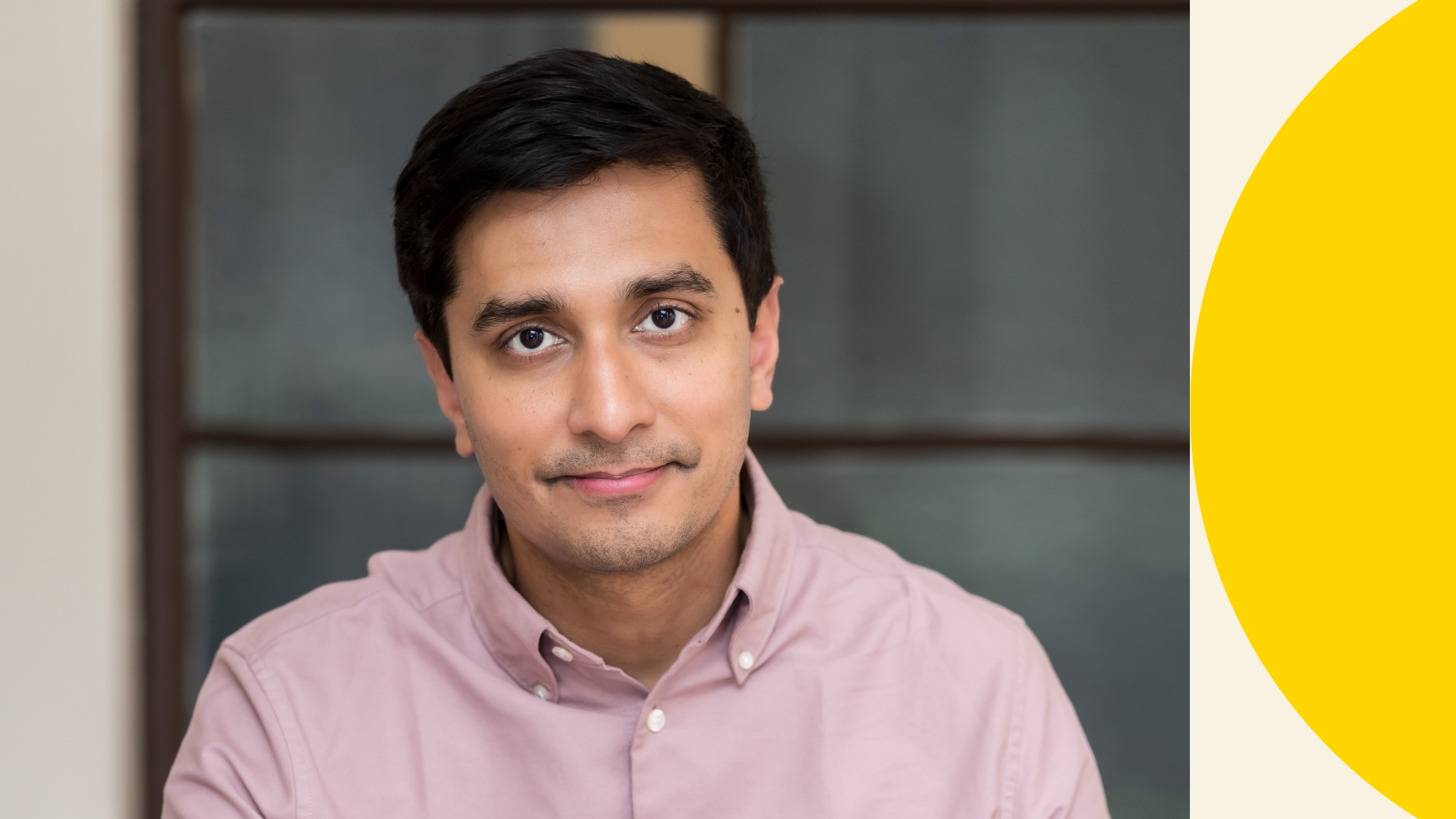
Meet the leaders who are putting AI to work for good. "Humans of AI for Humanity" is a joint content series from the Patrick J. McGovern Foundation and Fast Forward. Each month, we highlight experts, builders, and thought leaders using AI to create a human-centered future — and the stories behind their work.
In India, there are so many pending court cases that it would take an estimated 300 years to clear the backlog. Utkarsh Saxena co-founded Adalat AI with Arghya Bhattacharya to break down the justice system’s logistical problem.
From speech-to-text transcription software to case flow management systems, paperless filing systems, and more, Adalat’s AI-driven solutions reduce case resolution time by 30-50 percent. That is real time back for people waiting on access to justice. Operating in 9 Indian states, Adalat reaches over 3,000 courtrooms nationwide (and counting).
In this interview, Utkarsh talks about how Adalat AI is removing administrative friction inside courtrooms across India and building a new system that benefits humanity.
How did your journey inspire you to explore AI for humanity?
My journey into AI began in courtrooms, not in an AI lab.
Anyone who spends time practicing in courts quickly realizes that law school teaches only half the story: justice is not just a question of law, but also of logistics — a massive coordination problem. Courtrooms spend enormous time on administrative friction: handwritten notes during cross-examinations, searching for documents, and scanning records that should already be digital. When these systems break down, the consequences are deeply human.
I saw clients languish in prison for years awaiting trial — in India, 70-80% of prisoners are undertrials who have not yet been convicted. Others slipped into poverty waiting for cases to move forward, taking on debt or pulling children out of school. Perhaps most troubling were the people who stopped seeking justice altogether because they had lost faith in the system.
When advances in AI accelerated, it became clear that this technology could help address these coordination and information bottlenecks. That realization ultimately led to the creation of Adalat AI.
How is Adalat’s integration with the court system in India driving impact for people seeking justice?
Our philosophy is simple: if justice is to flow faster from the taps of the court system, someone has to fix the plumbing. Much of that plumbing today is clogged with paperwork and manual clerical processes.
Our job is to identify these bottlenecks across the lifecycle of a case and automate them with technology. For example, because many courts lack stenographers, judges often handwrite cross-examinations and oral arguments. We built an AI-powered legal transcription system in multiple Indian languages that captures proceedings in real time so testimony and arguments are recorded accurately without slowing hearings down.
We also built an AI-powered case flow management system — essentially a CRM for courts — that helps coordinate the many actors involved in a case. And because most filings are still submitted on paper even when documents are originally created digitally, we developed paperless filing systems to eliminate the costly cycle of printing and re-digitizing records.
For people seeking justice, these improvements translate into real outcomes: faster case resolution, quicker hearings for bail, shorter trials, and better quality decision-making. Most importantly, it helps ensure that poor and vulnerable citizens are not punished by the process.
"The goal of AI should be to remove administrative friction from justice systems and strengthen human decision-making — not replacing where fairness, rights, and human judgment are essential."Utkarsh Saxena, Co-Founder & CEO, Adalat AI
Where do you see opportunities for AI to continue improving access to justice?
Justice systems are fundamentally information systems — they run on documents, testimony, evidence, and legal reasoning. That makes them well-suited for thoughtful applications of AI.
In the near term, AI can significantly improve how courts manage cases: smarter case management systems, tools to predict and schedule hearing dates, and better coordination across the many actors courts depend on — victims, witnesses, lawyers, prosecutors, forensic labs, and police. Even small breakdowns in communication between these actors often create major delays.
AI can also strengthen judicial decision-making by giving judges better research tools and faster access to relevant precedents and legal materials, particularly in systems where judges have limited clerical support.
Over time, if the technology is safe and ready, some low-risk, high-volume matters — such as traffic violations or small commercial disputes — may be handled through automated systems in the first instance, with human judges reviewing contested cases.
But these possibilities must be approached carefully. The goal of AI should be to remove administrative friction from justice systems and strengthen human decision-making — not replacing where fairness, rights, and human judgment are essential.
What is Adalat AI’s approach to privacy and security?
Courts handle some of the most sensitive data in society, so privacy and security are foundational to how we build technology. Our approach has three core elements.
First, we develop and deploy our own models on secure infrastructure rather than relying on external APIs. Court data cannot be shared with third parties, so our systems are designed to operate within controlled environments.
Second, we localize data storage. Court data remains within the country and is hosted in domestic data centers aligned with judicial and government requirements.
Third, we use layered security and encryption systems that decentralize how keys and data are stored across local systems within court environments. This reduces vulnerability to centralized cyber attacks.
For us, responsible AI begins with respecting the confidentiality and institutional integrity of the justice system.
What core values drive your unique vision for impact in an AI-driven future?
Three principles guide our work. First, technology alone is never enough. Building tools is only half the challenge — the other half is human capacity. Technology must be accompanied by training, institutional support, and the development of state capacity, especially in the Global South.
Second, AI systems must be deeply customized for their domain. Generic technologies often fail when applied directly to complex institutions like courts. Solutions need to be tailored to the realities of judges, litigants, lawyers, and court staff.
And third, language matters enormously for access to justice. Many legal systems operate across dozens of languages, yet most AI tools are optimized for only a handful of global ones. Expanding AI capabilities across local languages is essential if the benefits of technology are to reach everyone.
"For us, responsible AI begins with respecting the confidentiality and institutional integrity of the justice system."Utkarsh Saxena, Co-Founder & CEO, Adalat AI
Which visionary leaders, philosophies, or movements give you hope for a more human-centered AI future?
The thinkers who give me the most hope are those focused on expanding human agency within institutions. Amartya Sen’s capability approach frames progress as increasing people’s real freedom to act — a principle that applies as much to technology as it does to development.
I’m also inspired by traditions in development economics and institutional design. Scholars like Elinor Ostrom, Abhijit Banerjee, Esther Duflo, and Daron Acemoglu remind us that the quality of public institutions ultimately shapes peoples’ lived experiences.
My work with Adalat AI sits at that intersection: using AI not to replace human judgment, but to give public institutions back time, capacity, and agency to serve citizens better, especially courts. The future I’m hopeful about is one where AI strengthens the plumbing of the state rather than bypasses it.
How would you describe Adalat in 7 words or less?
Plumbing the justice system, delivering justice.
For more on AI for good, explore our blog, subscribe to Fast Forward’s AI for Humanity newsletter, and keep an eye out for updates from the Patrick J. McGovern Foundation.