Dr. Alysia Garmulewicz Is Using AI to Build a Future with Regenerative Materials
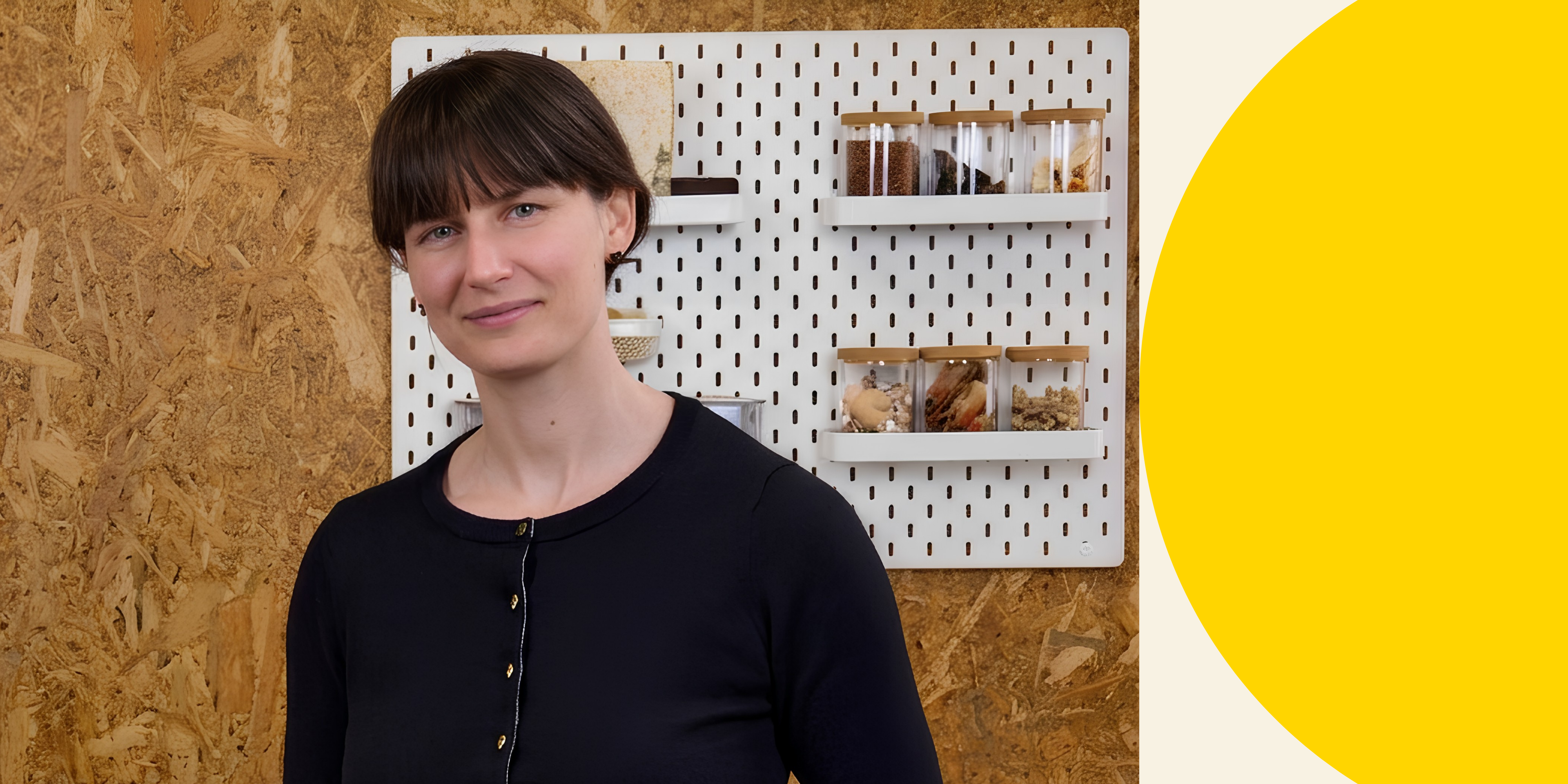
Meet the leaders who are putting AI to work for good. “Humans of AI for Humanity” is a joint content series from the Patrick J. McGovern Foundation and Fast Forward. Each month, we highlight experts, builders, and thought leaders using AI to create a human-centered future — and the stories behind their work.
Plastic is cheap and abundant, but harmful to the environment. Inspired by natural ecosystems, Dr. Alysia Garmulewicz is building a future that replaces plastic with local, regenerative materials.
While studying regional manufacturing for her PhD, Alysia found a problem in the materials economy: today, we rely on centralized supply chains that pollute the planet with long-lasting plastic waste.
Alysia’s research led her to co-found Materiom with Liz Corbin. Together, they built an AI-powered platform to help researchers develop bio-based alternatives to plastic. Startups use Materiom’s open-source materials library to create products with biomass-based materials. These alternatives act like plastic, but can be composted back into the earth at the end of their useful life. Less plastic means less waste and reliance on fossil fuels. Win, win, win.
In this interview, Alysia shares how AI is helping humanity unlock a future where regenerative materials are the norm.
How did your journey inspire you to explore AI for humanity?
During my PhD, I started asking whether material supply chains could localize alongside hardware and software production. That’s when I found significant barriers. Our centralized materials economy remains rooted in the petrochemical sector, undermining any real effort at regional production. This setup distributes waste that lasts for centuries.
I co-founded Materiom with Liz Corbin on the idea of opening up knowledge of how to make materials from abundant biomass anywhere on the planet. We built an AI-powered materials library housing this knowledge, supported by a global community.
The initial seeds of our community have grown into startups. However, a persistent barrier remains: the years of time and investment needed to develop market-ready materials.
With the advent of AI tools and the ability to generate large-scale data with robotics, we believe it is possible to equip innovators all over the world with market-ready sustainable materials. Materials made from biomass can be cycled regionally, bringing us closer to making materials the way nature does.
"We envision a world where materials regenerate the planet, rather than harm it. Where the packaging in the grocery store, the clothes you wear, and the insulation in your home are natural materials that draw down carbon and compost into healthy soil."Dr. Alysia Garmulewicz, Materiom
How has Materiom's open-source philosophy encouraged material developers to experiment and create new solutions?
We envision a world where materials regenerate the planet, rather than harm it. Where the packaging in the grocery store, the clothes you wear, and the insulation in your home are natural materials that draw down carbon and compost into healthy soil.
Our first step toward that vision was an open database. This “recipe book” shows how to make materials from abundant biomass, available to anyone starting out in bio-based material innovation. Now, a community of 26K people from 106 countries support Materiom’s database.
Dr. Fiona Bell began her PhD with Materiom's recipes and methods. She now leads a design research lab exploring sustainable alternatives to conventional materials such as plastics and aluminum. The Entangled Ecologies Lab has made 3D-printable materials from local waste streams like eggshells, orange peels and sawdust — innovations shared back with the Materiom Commons for others to build on.
How does Materiom foresee AI impacting sustainability practices in the materials economy?
Plastics literally run in our bloodstreams and pollute the planet’s ecosystems. The worst polluters, like single-use packaging and synthetic textiles, have few alternatives.
Due to trial-and-error, innovators usually take a decade to develop market-ready ecological alternatives. Barriers to materials discovery are falling, but today’s tools fail at understanding the properties and performance of bio-based materials. Bridging this gap requires data, which the bio-based materials industry lacks. We’re trying to change that.AI has the potential to overcome these obstacles. If we are to harness powerful AI tools for breakthroughs in plastics alternatives, we need to produce the data to train them.
How does Materiom account for diverse regional needs in building distributed value chains?
An equitable materials economy means a shift toward regional production. Just as renewables draw power wherever wind or sun is abundant, materials can be made from regionally abundant biomass. Rather than depending on centralized, extractive supply chains, communities can make packaging or textiles from local biomass and return them to the soil after use. We are building this logic into the data that drives our AI solutions.
We have worked with communities that benefit from regional production of natural materials:
- Seaweed growers in Chile, making compostable packaging to add economic value and encourage ecosystem stewardship;
- Communities in the Galápagos, making materials from fishery by-products;
- European cities, quantifying unavoidable food waste and identifying materials yield; and
- Farms in Michigan, modeling agricultural byproducts for natural materials.
These projects give us contextual insight into how a regenerative materials future can support communities worldwide.
What core values drive your unique vision for impact in an AI-driven future?
We are working toward a future where regenerative, natural materials replace petrochemical plastics as the new normal. Where the materials we rely on are made from low-carbon, abundant biomass. Think agricultural residues, food waste, seaweed, and mycelium that don't compete with land for food cultivation or biodiversity preservation. These materials act like plastic — they can stretch, hold weight, and repel moisture. But once these materials reach the end of their useful life, they can be composted to feed the soil, helping store carbon.
One core value driving our vision is equity & participation. Our goal is to enable everyone, everywhere, to participate in the regenerative materials economy. Natural, abundant feedstocks are found in developing countries. Yet the current economy largely extracts these resources while value accumulates elsewhere. We support bio-based materials that can be commercialized and produced in developing and developed economies, helping create a more equitable materials economy.
The other is to be inspired by nature. Nature produces high-performance materials from a small set of reusable building blocks — sugars, proteins, lipids — assembled through chemistry that is safe for living systems. Those materials (like adhesives produced by mussels or spider silk) can outperform synthetic equivalents. Even better, these materials biodegrade into nutrients after they reach the end of their useful life, without landfill or waste. We apply the same principle to the materials we make and help others discover, so that they can be sourced and cycled in ways that regenerate the biosphere.
Which visionary leaders, philosophies, or movements give you hope for a more human-centered AI future?
The development of AlphaFold, led by Demis Hassabis, John Jumper, and their team at Google DeepMind, is clear proof that AI can uplift and advance our abilities to solve humanity's greatest challenges. AlphaFold predicted the 3D structure of over 200M proteins and released them in a freely accessible database, accelerating work across the biological sciences from drug discovery to vaccine design.
We also take hope from other nonprofits applying AI to critical challenges. Rainforest Connection uses machine learning to listen for and detect illegal logging as it happens. The organization also identifies species by their calls to build a live picture of ecosystem health. Visilant’s AI reads smartphone images of the eye so that community health workers can screen for conditions like cataracts in regions where most patients struggle to access a specialist. These organizations demonstrate considerable ingenuity when building their solutions, all while keeping their communities at the forefront.
What is your 7-word autobiography?
Moved by mountains; smiles of our children.
For more on AI for good, subscribe to Fast Forward’s AI for Humanity newsletter and keep an eye out for updates from the Patrick J. McGovern Foundation.