Intelehealth’s Open-Source AI Delivers Healthcare to Remote Regions
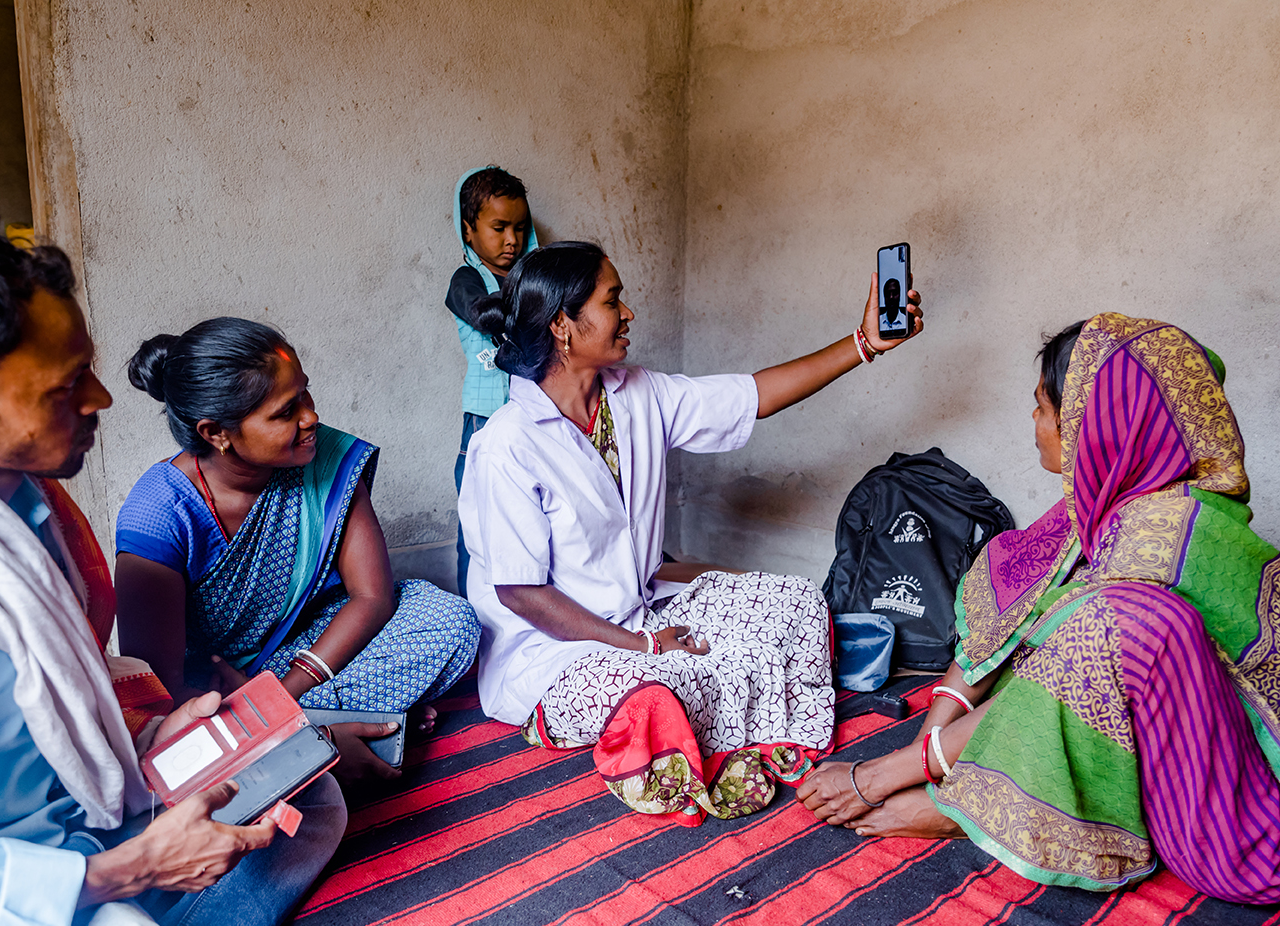
Intelehealth builds open-source technology and AI solutions to deliver quality healthcare where there is no doctor.
Issue Area: Health
Founder: Neha Verma
Location: Global


When the nearest doctor is 60 miles away
Over half the world's population lacks reliable access to healthcare. Rural individuals face major barriers to care — from long distances to the nearest hospital to limited autonomy in health decisions. Women bear the brunt of these barriers. They experience higher rates of chronic illness, delayed treatment, and poorer maternal outcomes. In 2022, the global maternal mortality ratio between rural and urban populations was nearly 3:1.
One potential solution can deliver healthcare to these communities: telemedicine. Community health workers can use telemedicine to connect patients with remote doctors and administer treatment on site. But implementing telemedicine systems is complex, expensive, and difficult. Without an active effort to scale sustainably, telemedicine systems often fail to get off the ground.
Telemedicine with a twist
Neha Verma saw firsthand how India’s healthcare system failed rural women. Driven to build a system that worked, Neha studied how to deliver better healthcare to last-mile populations at Johns Hopkins University.
She found that rural frontline health workers are expected to do a lot with little. They gather full clinical histories, run physical exams, and manage teleconsultations. Remote doctors then rely on that information to diagnose patients and plan treatment. In order to communicate with and treat patients effectively, health workers and doctors need reliable telemedicine tools. Without these tools, care for isolated individuals breaks down at scale.
This research led Neha to found Intelehealth, a nonprofit that builds telemedicine technology and AI solutions to deliver healthcare to last-mile populations. Intelehealth works across three channels:
- An app that connects frontline health workers in rural areas with remote doctors.
- Direct-to-patient WhatsApp chatbot and video consultations, built for patients to access virtual primary care at-home.
- A direct-to-patient helpline that connects underserved communities with remote doctors for medical advice, prescriptions, and more.
Patients answer basic health and diagnostic questions through the Intelehealth platform. Then they meet a remote doctor for a teleconsultation and book follow-ups as needed. Through Intelehealth, these patients can receive expert help that they could not access otherwise.
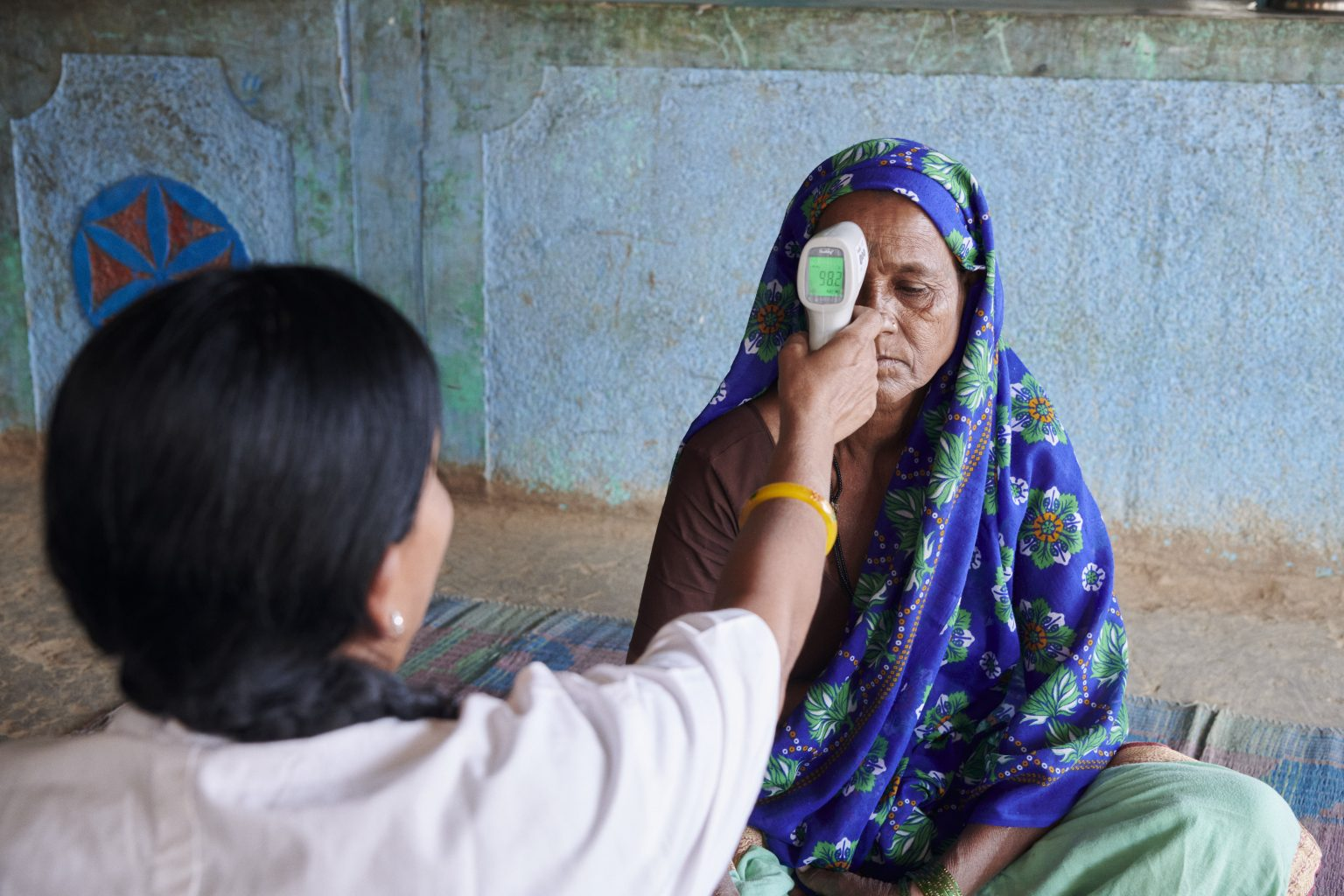
Intelehealth started their operations in India, the world’s most populous country. Two-thirds of India’s population lives in rural areas. If Intelehealth could deliver healthcare to these rural communities at scale, they could apply that formula to similar regions around the world.
Intelehealth started by operating their own physical health kiosks in remote villages. But the kiosks were costly, limiting how many people they could work with. Intelehealth then found a path to scale: government health systems. If Intelehealth helped governments build telemedicine into already existing systems, patients could receive care nationwide. Health providers wouldn’t have to start from scratch in developing a telemedicine solution. Costs would drop for governments and patients alike.
Intelehealth’s theory for scale paid off. When the COVID-19 pandemic hit, the Indian government tapped Intelehealth to help build eSanjeevani, its national telemedicine system. Through the platform, rural patients can see remote doctors without paying for travel or losing wages. eSanjeevani also digitizes health records in one system, so doctors can access patient history during follow-ups.
A playbook for open-source telemedicine
Intelehealth built their solutions to be open source, so any health system can use them. But easy to access doesn’t mean easy to run. Running a sustainable telemedicine system is difficult. In fact, three in four telemedicine initiatives stall during the operational phase.
To meet this challenge, Intelehealth takes a “technology-agnostic, methodology-strict” approach. What this means is their technology adapts to any existing health system, but the industry standards for high-quality telemedicine stay the same. Intelehealth builds those standards in a six-step implementation model and walks each partner through it. Governments, NGOs, and local health centers use the model to vet their telemedicine systems against criteria like program design and readiness, supply- and demand-side strength, and capacity building. Once a system meets the model’s standards, Intelehealth steps back. The system is built to run on its own.
“You can never stop worrying about your child; but after this teleconsultation and the necessary medications for [our child], we are so much at peace now.”Sita Manjhi, eSanjeevani client
Ayu: How AI optimizes clinical care
Intelehealth’s platform connected more rural patients with remote doctors, but teleconsultations were still short. Doctors and health workers often rushed to capture patient data, make diagnoses, and plan treatment in the time they had.
But what if doctors and health workers could do more in less time? To address this need, Intelehealth developed Ayu 2.0, an AI-powered digital assistant that makes diagnosis and treatment faster and more accurate. Ayu helps health workers capture and analyze patient history, drawing on 250+ structured clinical protocols to spot patterns linked with specific diseases. Then, Ayu gives a shortlist of likely diagnoses to doctors so they can deduce the correct one faster.
In Intelehealth’s latest study, Ayu:
- Improved diagnostic accuracy for doctors by 12%.
- Reduced consultation time by 47%.
- Improved safety of prescribed treatment by 54%, with fewer dosage errors, drug interactions, and unnecessary duplications.
- Included the correct diagnosis in the top 5 differential diagnoses 93% of the time.
Independent clinical evaluators rated 90.8% of the AI-generated diagnostic suggestions as “very appropriate.” AI-assisted treatment plans were also deemed more complete, including lifestyle advice, follow-up actions, and tests alongside medications.
But speed and accuracy do not mean blind trust. Inspired by the Hippocratic Oath, Intelehealth ensures that their AI is designed to do no harm. That means ensuring doctors stay in control of Ayu rather than allowing Ayu to make decisions on their behalf. Intelehealth does so by designing “good friction” at each step of the user flow. The friction slows doctors just enough to weigh their options, but not so much that they abandon the system. Doctors make the final call on every diagnosis and treatment plan.
Fund the work, then help people see it
The UPS Foundation, a leader in supporting health and humanitarian relief, found strong alignment with Intelehealth’s mission. Since 2025, The UPS Foundation has supported Intelehealth with philanthropic capital — but this partnership brings more than a check.
The UPS Foundation understands that visibility and credibility are key to nonprofits like Intelehealth. The UPS Foundation and Intelehealth co-hosted a virtual event in India during which Intelehealth shared their work with 80+ key stakeholders. The UPS Foundation also coordinates giving campaigns, spotlighting Intelehealth and other AI-powered nonprofits expanding access to healthcare around the world.
The UPS Foundation offers a model for grantmakers: fund the work, then help people see it. Grantmakers who open their connections can unlock new audiences for their grantees.
“Access to quality healthcare can change the trajectory of a family and a community. What stands out about Intelehealth is how they're using technology to bring care closer to people in hard-to-reach communities. It's the kind of innovative, community-centered approach that aligns with The UPS Foundation's commitment to helping build healthier, more resilient communities."Nicolò Sgreva, International Community Relations Director, The UPS Foundation
Delivering care no matter the distance
Intelehealth works with governments and community health initiatives across India, Syria, and Kyrgyzstan to reach more patients. Intelehealth has cut travel distances for the communities they serve by 70%. Reported patient health outcomes improved by 80%.
Doctors and health workers diagnose and deliver treatment with greater accuracy, efficacy, and speed. This is happening at scale. Intelehealth has enabled over 23M teleconsultations in India for over 10M people, aiming for 100M teleconsultations by 2030. As this momentum grows, more patients can finally receive care with dignity — no matter their location or circumstances.