Fast Forward's 2026 Alumni Retreat Recap
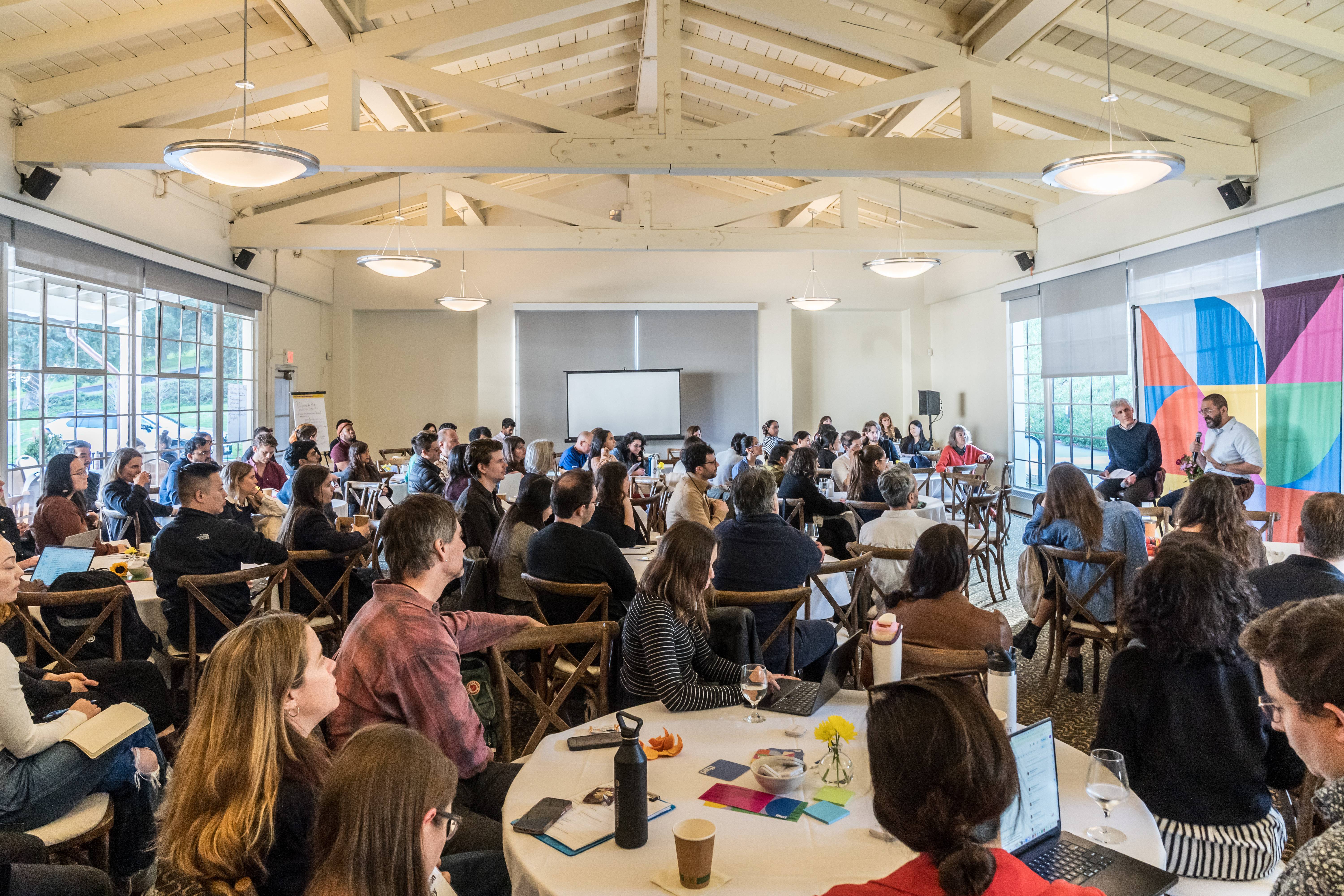
We believe in three-peats, and the 2026 Fast Forward Alumni Retreat was no exception. Nonprofit leaders, technologists, and funders gathered in the Presidio, San Francisco for our third annual alumni retreat to navigate big questions:
-
How can tech nonprofits adapt to the ever-shifting sociopolitical landscape?
-
How can mission align with messaging, and how can impact align with revenue?
-
How can we build and scale AI responsibly?
Of course, these questions can’t be answered in just one or even two caffeinated conversations. Over a week filled with honest conversation, book recs, and sticky notes (okay, and a lot of laughs), Fast Forward alums shared what they are learning in real time. We don’t believe in gatekeeping, so here are the top insights we’ve gathered. The crème de la crème is now yours.
Strategic Planning Over Prediction
When the future feels murky, the instinct is to model every possible scenario. Colleen Brosman, Partner at The Bridgespan Group, offered a different approach. In a strategic planning session, Colleen walked leaders through a simple framework that allows nonprofits to ground themselves during turbulent times.
-
Define your non-negotiables. Whether those are your impact goals or core capabilities, define the non-negotiables that cannot shift, even when everything else does.
-
Avoid the scenario planning trap. One can imagine infinite scenarios, so it’s important to know when to stop. Instead, create a few simple scenarios to surface risks. Then, focus on what can go wrong. Rather than sticking rigidly to predictions, your strategy should anchor to your non-negotiables and prioritize adaptability if things don’t go according to plan.
-
Map the path from worst-case scenarios back to your non-negotiables. This allows you to note likely obstacles and their trigger points. By keeping an eye on potential disruptors and adjusting your approach accordingly, your organization can stay the course instead of floundering.
What if your strategy starts veering off-course? Colleen pointed out the importance of tracking early signals, which usually fall in three categories:
-
Emerging learnings: These are your initial results. For example, you run a pilot accelerator. What results tell you to double down or pull the plug?
-
Progress indicators: Performance metrics that show forward momentum.
-
Disruptive events: External shifts most likely out of your control, such as policy changes or funding cuts.
Different from impact metrics, early signals indicate when the conditions for your plan to succeed are shifting. They are your cue to adapt.
Fundraising Through Transparency and Education
Pursestrings feel tighter than ever. All the more reason why nonprofits must focus on building trust with potential and existing funders.
The Fundraising Fundamentals
Nisha Kadaba (Director of Programs, Agog) and Kristin Gilliss Moyer (COO & Head of Portfolio, Mulago Foundation) brought fundraising back to basics. What are those basics? Building and strengthening make-or-break relationships.
Step up your fundraising game:
-
Tailor all forms of communication to your ideal funder. Make it easy for grantmakers to understand what you do and how to help you. Online presence is a great place to start. Is your mission clearly stated on your website? Do you have a “Donate” button or an “Impact” page? Funders consider the absence of visible impact metrics a red flag.
-
Set a precedent of honesty. There’s pressure to look polished and on top of everything around funders, but anything worth building will encounter obstacles. It’s best to be transparent from the get-go with those supporting you.
-
Get good at asking. Before you even begin talking to a funder, do your research! Compile a list of potential grantmakers and look at their 990s to see every organization they’ve funded and at what level. Narrow down that list to qualified leads so you know who to approach. As Kristin said, “We both know the conversation is about money. Don’t shy away from talking about it. It’s not awkward for us as funders. That’s our job.”
Leverage Your Knowledge of AI to Educate
Here is the opportunity: Nonprofits “know more about AI than the person who’s giving [them] money, 9 times out of 10,” according to Victor Cordon, Director of Social Impact at Okta.
In our Funder panel, Shivani Garg Patel (Chief Strategy Officer, Skoll Foundation), Zhuli Hess (Program Officer, Hewlett Foundation), and Victor Cordon (Director of Social Impact, Okta) shared this simple yet game-changing truth. Nonprofits often know more about how AI works and what to do with it than funders. Funders want to feel catalytic, but it’s hard to pour money into a bet they’re unsure about. If you understand the models, the risks, and the use cases, you have leverage.
Educate your funders. Show how AI accelerates impact, explain trade-offs, and share what responsible deployment looks like. Turn your expertise into assets: a podcast, a whitepaper, a founder-written essay. The Okta Foundation recently funded an organization because its leader demonstrated a sophisticated understanding of an emerging space Okta wanted to explore. Thought leadership builds trust.
“We both know the conversation is about money. Don’t shy away from talking about it. It’s not awkward for us as funders. That’s our job.”Kristin Gilliss Moyer, COO & Head of Portfolio at Mulago Foundation
Pragmatic Engineering
As more tech nonprofits adopt and integrate AI, demand for strong product and engineering talent grows. Building a top-tier engineering team can feel daunting when you have to compete with the private sector on expertise and budget. But it’s not impossible.
How to Hire Engineers When Engineering Is Not Your Forte
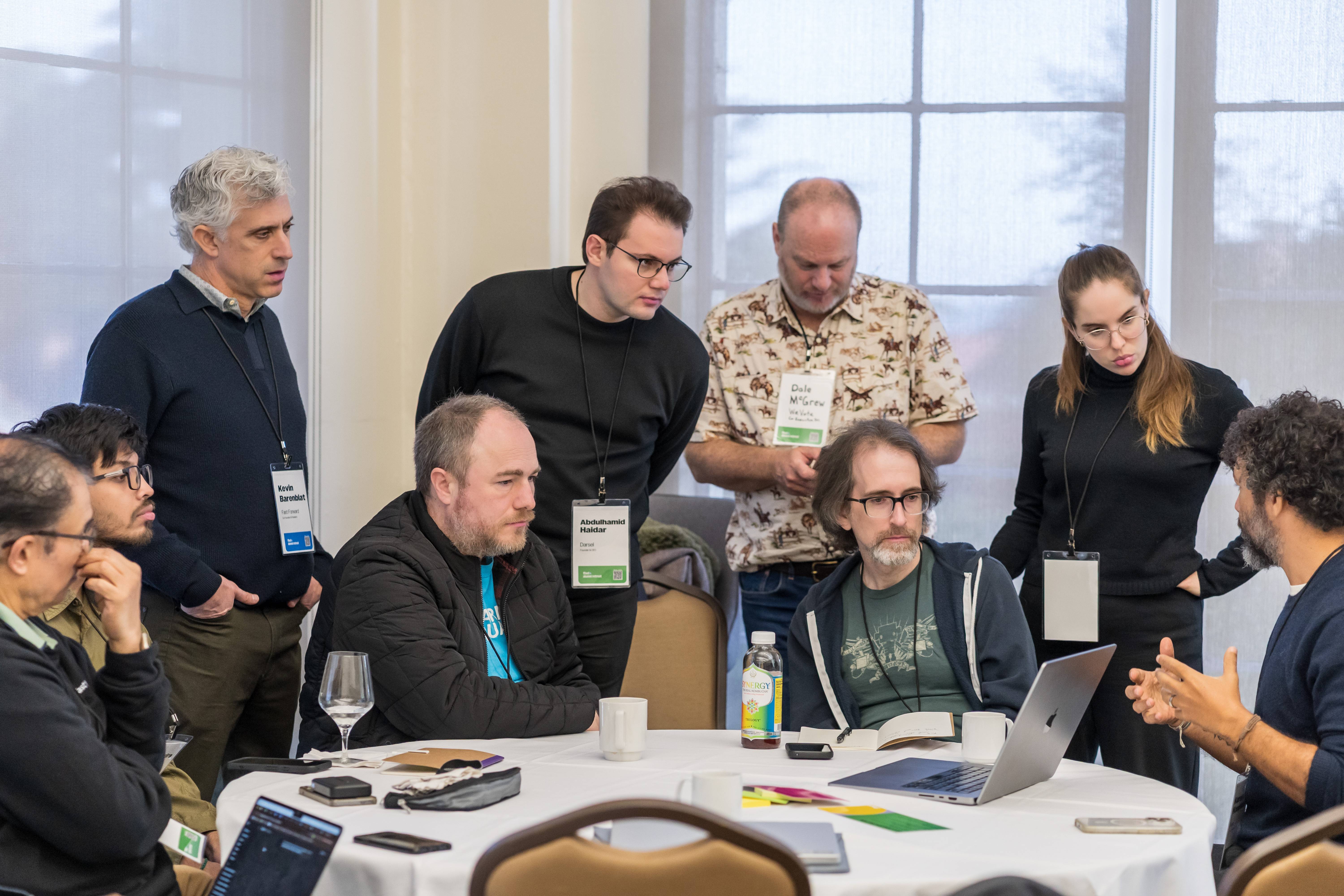
Andrew Warren (Head of Product, Recidiviz) and Olutosin Sonuyi (Director of Engineering, CareerVillage) are no strangers to building nonprofit engineering teams from the ground up. They shared their best insights on what to look for in an engineer:
-
Generalists over specialists. Unless there is a need to hire for a particular profile (e.g., a mobile specialist or someone with a strong design background), hiring for specifics can wait until later. Hiring generalists early on ensures a strong foundation for the team to grow.
-
The “spike” candidate. Occasionally, a candidate comes through the pipeline who is amazing in one area but lacking in other areas. Use this as an opportunity to look at your team holistically and see if other engineers can make up for their deficits. Sometimes hiring the “spike” candidate can be worth it if it means solving hard, niche problems.
-
Communication matters. While technical skills are still paramount, communication is critical as teams grow larger. The ability to collaborate and communicate ideas, tradeoffs, and design choices becomes even more important as teams scale. Use interviews to test this competency.
A changing reality for engineering interviews
Olutosin and Andrew don’t necessarily see using AI in interviews as a red flag. Instead, they suggest balancing its use against sound judgment. It’s more important to assess a candidate’s decision-making capabilities rather than their knowledge of syntactic semantics. Andrew even proposes watching a candidate use the AI tool live to see how they integrate it into their code.
What Are Best Practices to Ensure a Healthy Engineering Culture?
So, you’ve hired your first engineer (and second and third) — congratulations! You have a bona fide engineering team! Now comes the next challenge: how do you keep the engineering engine running smoothly? How do you avoid burning out your engineers?
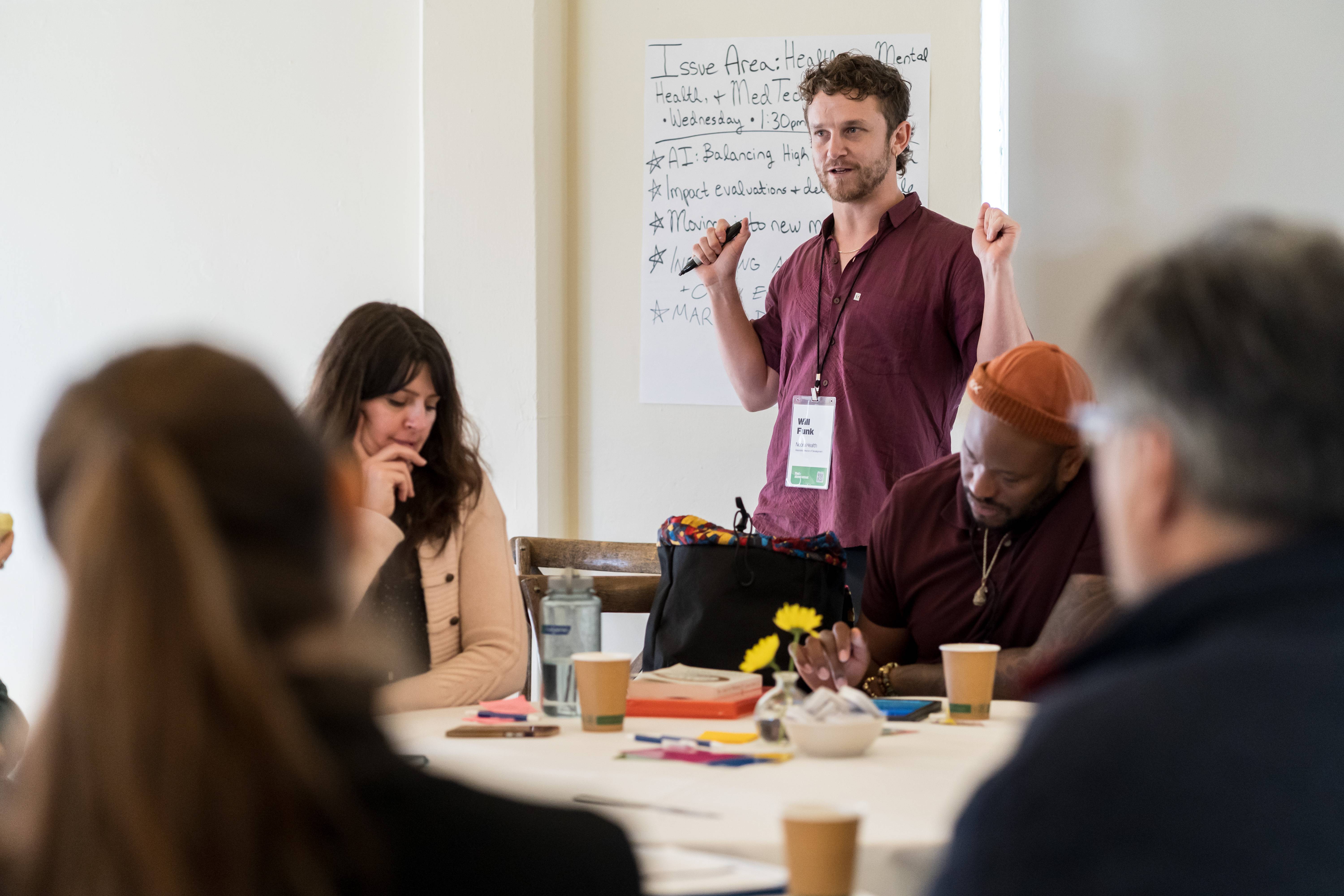
Nick Hurlburt (Executive Director of Aselo, Tech Matters) and Elnaz Moshfeghian (Engineering Manager, Instagram) shared their experiences in shipping smart from the start:
-
Ship before it’s perfect. It’s easy for engineers to over-perfect from the very beginning. However, engineering leaders aren’t “evaluating code based on whether the launch is bug-free,” says Elnaz. It’s difficult to fix bugs in a hypothetical state. Rather, ship when the code is good enough and fix bugs in the production phase.
-
Architecture decisions compound. Data model choices echo for years, so think long-term early. Optimize for horizontal scaling from the start.
-
Manage your mental game. There is no perfect playbook when it comes to early-stage engineering (much less engineering for a nonprofit). Since everyone is figuring it out, focus on the quality of work and do your best to understand the organization through the lens of revenue, costs, and project ROI.
-
Clean-up saves trouble down the line. Shipping aggressively means investing in clean-up periods. To manage these times: set time-boxed experiments, acknowledge trade-offs openly with your team, and create processes appropriate for current org size. Rigorous documentation throughout sprints — enhanced by retros — also helps with clean-up.
Building in Solidarity Is How We Build AI for Humanity
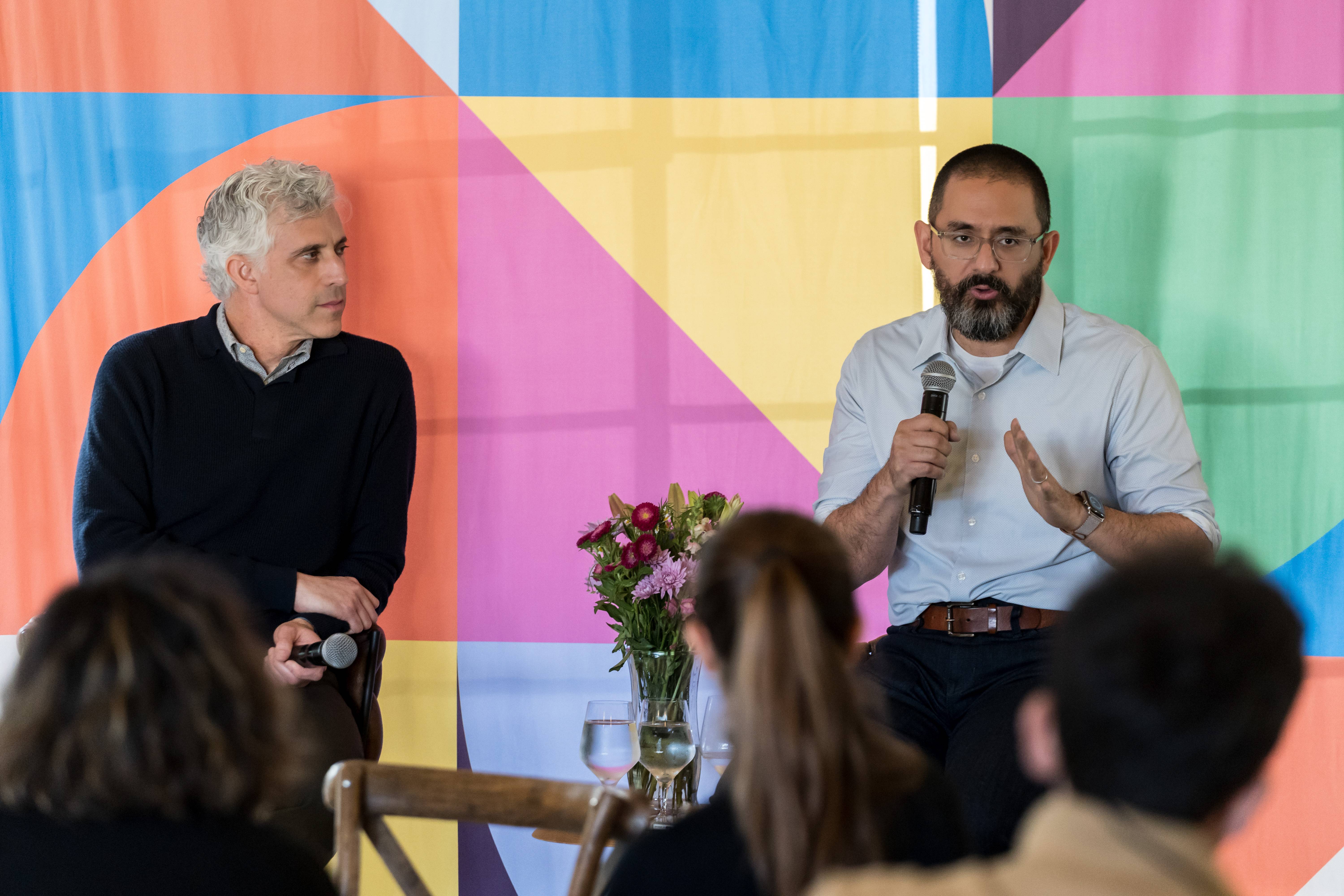
To end the week, Fast Forward Co-Founder Kevin Barenblat held a fireside chat with Raffi Krikorian, CTO of Mozilla. The section below is pulled from Kevin’s AI for Humanity Substack (subscribe here).
Raffi rejects the idea that tech is neutral. Design choices embed values. Every decision about who owns the data, who controls the algorithm, who takes responsibility when things go wrong — those aren't technical questions. They're values questions.
So he offered a framework worth keeping in your back pocket when evaluating tech:
-
Whose side is it on? Are you owning it or renting it? Are you the product, or are you using the product?
-
Do you have an exit ramp to take what you’ve built with you? Or are you locked in by design?
-
Who's responsible when it breaks? Does the company take the blame, or do they push it onto you?
These questions matter whether you're choosing tools or building them.
Build for the Margins
Raffi's advice for responsible building: "Build for the margins and the center will follow."
He pointed to the curb-cut effect. Curb cuts were designed for wheelchairs, but they benefit everyone: parents with strollers, delivery workers, travelers with luggage. The same applies to AI. Design for underserved populations, low-connectivity environments, communities at the margins, and you create better tech for everyone.
Mozilla lives this. They build offline-first, which makes their online tools faster. They optimize for low-end hardware, which makes high-end devices fly.
Pragmatic, Not Purist
For nonprofit builders with limited resources, Raffi gets it. His advice: "Don't be a martyr. Use the best tools you need to do your job now.” But be clear on your values and trade-offs. Always think about exit ramps. Know what compromises you're making so you can move when better options arrive.
His final message to the room: "Live your values and push them out." Especially when the easy path pulls you away from them.
The values of the people building AI for humanity matter. Choose the world you want to live in, then choose the tech to get there.
“Live your values and push them out.”Raffi Krikorian, CTO of Mozilla. His final advice to the Fast Forward alum.
Looking Ahead + Resources
With that, the 2026 Alumni Retreat is a wrap! For those who attended, we hope you had a meaningful and joyful experience! For those who could not attend, we hope these insights are useful as you navigate the year ahead.
For more tech nonprofit goodness, we compiled essential readings, tools, and expert insights to help you get started: